Call/WhatsApp: +91 88266 53638

MBBS abroad vs private medical college India — full cost comparison 2026
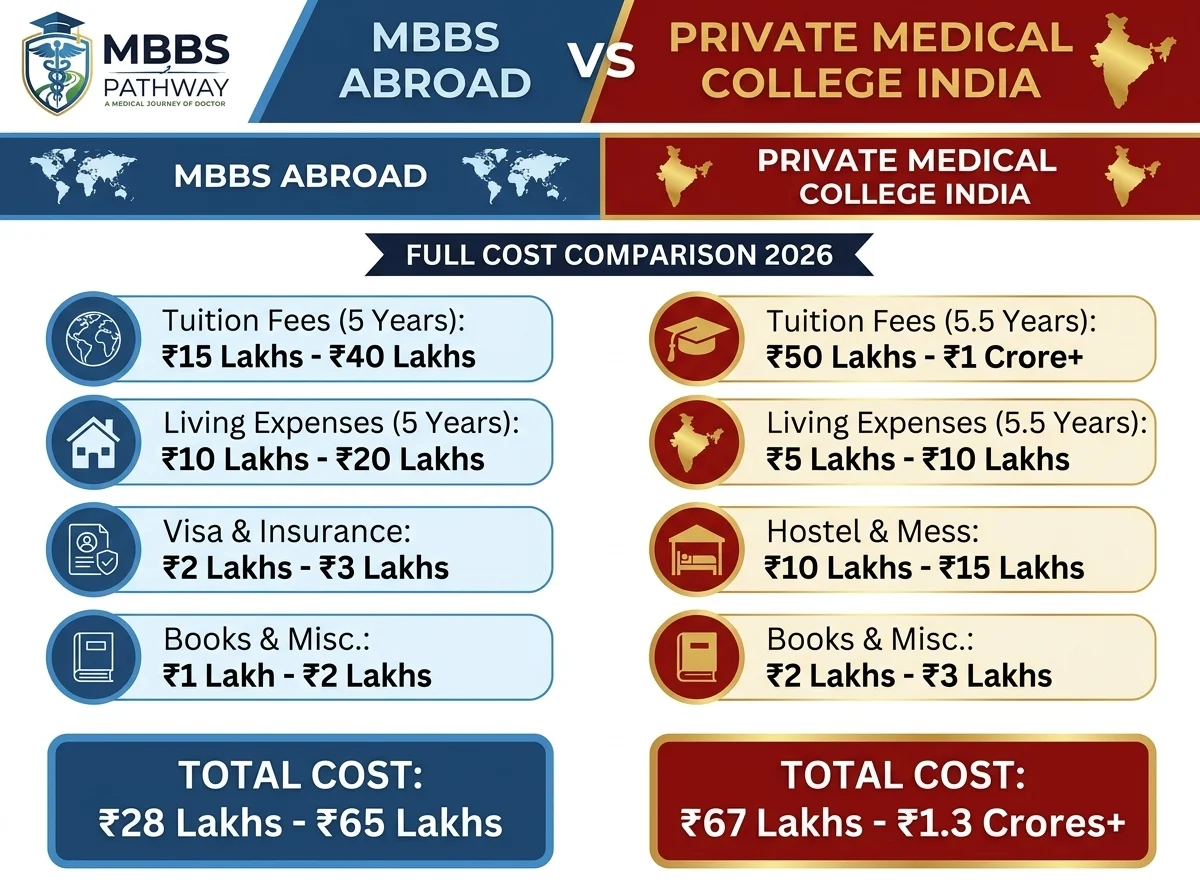
In this article: I break down the actual 2026 cost of MBBS in Indian private colleges vs MBBS abroad — tuition, hidden costs, capitation fees, living expenses, education loans, and return on investment. No filler. Just numbers and honest advice from someone who has counselled 1,000+ students through this exact decision.
📋 Table of Contents
Every year, thousands of NEET-qualified students end up at a crossroads. They didn't crack a government seat, and the options in front of them are clear — either pay for a private medical college in India, or consider MBBS abroad. I've sat across from hundreds of families trying to make this exact call. And honestly, the decision comes down to one thing most people don't discuss openly: the full, real, no-surprises cost.
So in this article, I'm going to put everything on the table. No vague estimates, no cherry-picked numbers. Just what you'll actually spend — and what you'll actually get back.
The Real Cost of MBBS in a Private Medical College in India (2026)
Let's start here, because this is where most families underestimate badly. The advertised fee and the actual fee are rarely the same.
Tuition Fees — What Colleges Officially Charge
Private medical colleges in India fall into three broad tiers based on tuition:
| College Tier | Annual Tuition (Management Quota) | Total 5.5-Year Tuition | Example Colleges |
|---|---|---|---|
| Premium / Deemed | ₹15 – ₹25 lakh/year | ₹82 – ₹1.37 crore | KMC Manipal, DY Patil, Symbiosis |
| Mid-Tier Private | ₹10 – ₹15 lakh/year | ₹55 – ₹82 lakh | Yenepoya, SSIMS Davangere, most state colleges |
| Newer / Affordable | ₹8 – ₹12 lakh/year | ₹44 – ₹66 lakh | Recently established NMC-approved colleges |
| NRI / Sponsored Quota | ₹30 – ₹45 lakh/year | ₹1.65 – ₹2.5 crore | Deemed universities with NRI seats |
These are officially declared fees — what the college puts in its brochure. But in my experience, the real number almost always runs higher.
The Capitation Fee Problem — The Cost Nobody Talks About
⚠ Important: The NMC and the Supreme Court of India have banned capitation fees. But the practice of demanding an unofficial "donation" in cash for management quota seats is still widely reported. Families pay ₹20 lakh to ₹80 lakh under the table — with no receipt. Never pay an agent promising a backdoor seat in cash. It's illegal, and you have zero protection if things go wrong.
Capitation fees are the reason some families end up spending ₹1.2 crore or more for what was advertised as a ₹60 lakh course. I've heard stories that make my stomach turn — parents selling property, families borrowing from relatives, only to realise later that the college's infrastructure or clinical training didn't justify a quarter of what they paid.
Hidden Costs at Indian Private Medical Colleges
Beyond tuition, students at private medical colleges typically pay:
| Cost Head | Annual Estimate | 5.5-Year Total |
|---|---|---|
| Hostel (AC, mandatory) | ₹1.5 – ₹3 lakh | ₹8 – ₹16.5 lakh |
| Mess / Food | ₹60,000 – ₹90,000 | ₹3.3 – ₹5 lakh |
| Books, equipment, lab | ₹30,000 – ₹60,000 | ₹1.6 – ₹3.3 lakh |
| Exam / university fees | ₹20,000 – ₹50,000 | ₹1.1 – ₹2.75 lakh |
| Coaching (NEET PG/NExT prep) | — | ₹1.5 – ₹3 lakh (post-MBBS) |
| Total add-ons | ₹15 – ₹30 lakh |
So a private MBBS in India that costs ₹10 lakh per year in tuition realistically costs ₹70–90 lakh by the time you factor in everything. A premium-tier college? Easily ₹1.2 crore or more.
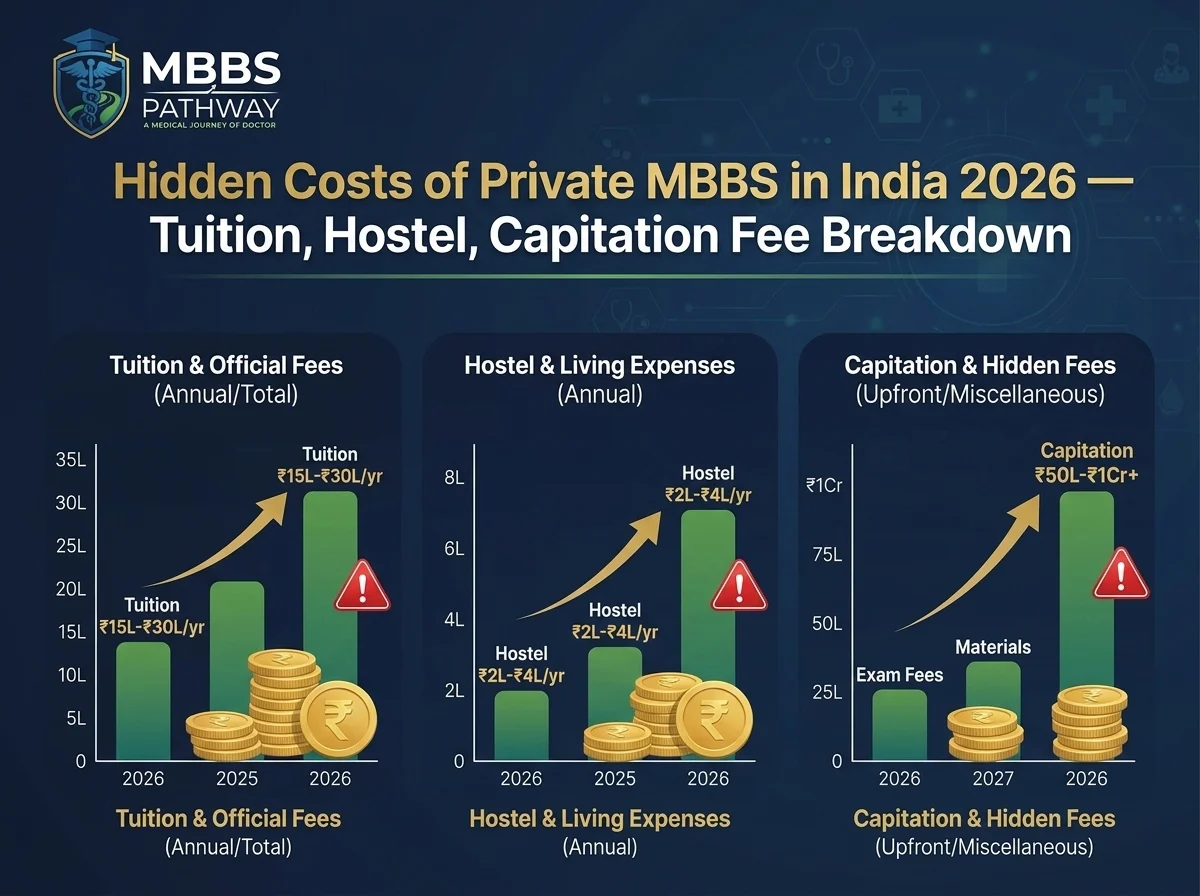
Fig 1: How the advertised fee vs actual total cost differs in private medical colleges in India (2026 estimates).
Total Cost of MBBS Abroad — Country-by-Country Breakdown (2026)
Now let's look at the other side. MBBS abroad is not a single number — it varies significantly by country, city, and university. But the overall picture is dramatically different from private India.
I've worked with students in Russia, Uzbekistan, Kazakhstan, Georgia, Bangladesh, and Nepal. Here's what they actually spend:
| Country | Annual Tuition (USD / ₹ equiv.) | Annual Living Cost (₹) | Total 6-Year Cost (₹) | NMC Approved |
|---|---|---|---|---|
| 🇷🇺 Russia | $3,500–$6,000 / ₹2.9–5 lakh | ₹2–3.5 lakh | ₹28 – ₹50 lakh | ✅ Yes |
| 🇺🇿 Uzbekistan | $2,500–$4,500 / ₹2–3.7 lakh | ₹1.2–2 lakh | ₹19 – ₹35 lakh | ✅ Yes |
| 🇰🇿 Kazakhstan | $3,000–$5,500 / ₹2.5–4.5 lakh | ₹1.8–2.8 lakh | ₹26 – ₹44 lakh | ✅ Yes |
| 🇬🇪 Georgia | $4,000–$7,000 / ₹3.3–5.8 lakh | ₹2.5–4 lakh | ₹35 – ₹58 lakh | ✅ Yes (select universities) |
| 🇧🇩 Bangladesh | $2,000–$4,000 / ₹1.6–3.3 lakh | ₹80,000–1.5 lakh | ₹14 – ₹28 lakh | ✅ Yes (select universities) |
| 🇳🇵 Nepal | ₹4–7 lakh/year (INR) | ₹1–1.8 lakh | ₹30 – ₹50 lakh | ✅ Yes |
Russia remains the most popular destination — and for good reason. Strong clinical training, English-medium instruction at top universities, and a familiar medical curriculum make it a reliable choice. Uzbekistan has emerged as the most affordable option for 2026, with several Tashkent-based universities now well-regarded by the NMC. I always tell families: don't just pick the cheapest country. Pick the country where the training quality supports a good FMGE outcome.
Speaking of which — if you haven't read our piece on FMGE pass rates by country in 2025, I strongly recommend you do. The numbers there directly affect your career — and your return on investment.
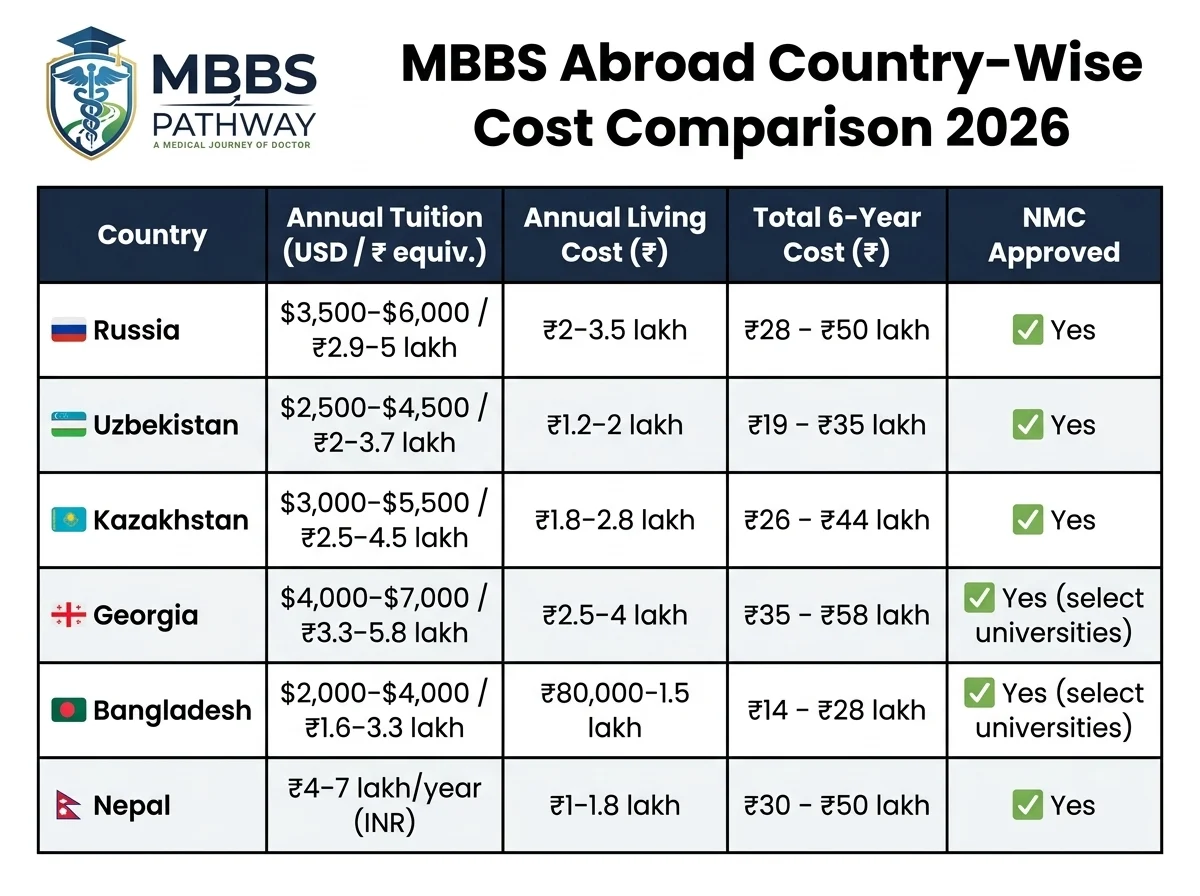
Fig 2: Estimated total 6-year MBBS cost abroad by country for Indian students (2026).
The Hidden Costs of MBBS Abroad — Don't Ignore These
I'd be doing you a disservice if I only listed tuition. Here are the costs that many students don't budget for — and then regret:
| Cost Head | One-Time / Annual | Total Estimate (6 Years) |
|---|---|---|
| Return flight tickets (India ↔ Country) | ₹60,000 – ₹1 lakh per trip | ₹3.6 – ₹6 lakh (6 trips) |
| Visa, registration, document fees | ₹30,000 – ₹60,000 (once) | ₹30,000 – ₹60,000 |
| Medical insurance | ₹10,000 – ₹30,000/year | ₹60,000 – ₹1.8 lakh |
| FMGE / NExT coaching (India) | Post-graduation | ₹1 – ₹3 lakh |
| Forex conversion charges | 1–3% on transfers | ₹50,000 – ₹1.5 lakh |
| Phone, internet, personal | ₹15,000 – ₹25,000/year | ₹90,000 – ₹1.5 lakh |
| Hidden cost total (estimate) | ₹6.3 – ₹14 lakh |
So when you look at MBBS abroad honestly — with all these add-ons — the real total for Russia comes to roughly ₹35–65 lakh over 6 years. For Uzbekistan, it's closer to ₹25–50 lakh. These are still dramatically lower than private India in management quota. But they're not the ₹15 lakh numbers some unscrupulous agents advertise. Any consultant who quotes you an all-in price below ₹20 lakh for MBBS abroad — including Russia — is hiding something.
We cover forex support and education loans in detail on our admission support page. And if you're worried about how to spot consultants who misrepresent costs, our article on how to identify fake MBBS consultants covers every red flag in detail.
Head-to-Head Comparison — MBBS Abroad vs Private India (2026)
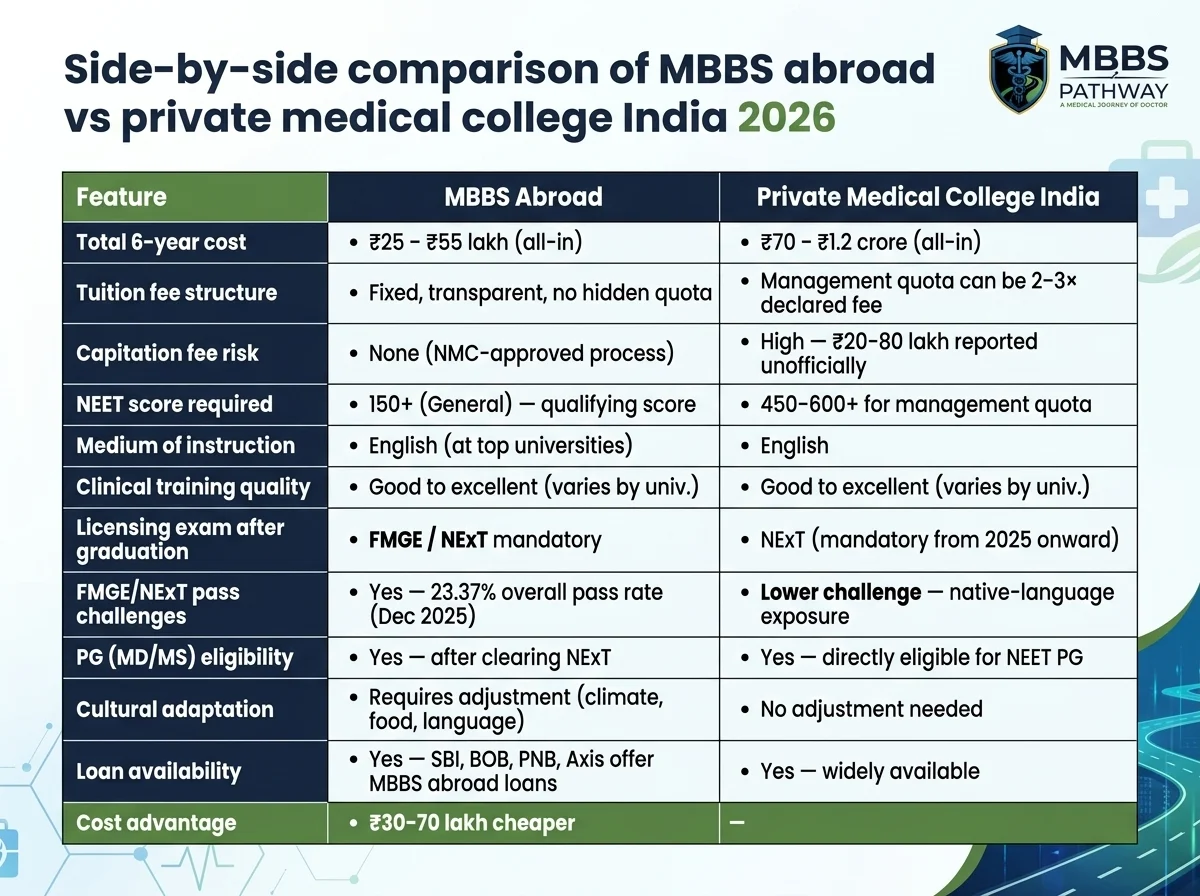
Fig 3: MBBS abroad vs private medical college India — side-by-side parameter comparison.
| Parameter | 🇷🇺 MBBS Abroad (Russia / Uzbekistan) | 🇮🇳 Private MBBS India (Mid-tier) |
|---|---|---|
| Total 6-year cost | ₹25 – ₹55 lakh (all-in) | ₹70 – ₹1.2 crore (all-in) |
| Tuition fee structure | Fixed, transparent, no hidden quota | Management quota can be 2–3× declared fee |
| Capitation fee risk | None (NMC-approved process) | High — ₹20–80 lakh reported unofficially |
| NEET score required | 150+ (General) — qualifying score | 450–600+ for management quota |
| Medium of instruction | English (at top universities) | English |
| Clinical training quality | Good to excellent (varies by univ.) | Good to excellent (varies by univ.) |
| Licensing exam after graduation | FMGE / NExT mandatory | NExT (mandatory from 2025 onward) |
| FMGE/NExT pass challenges | Yes — 23.37% overall pass rate (Dec 2025) | Lower challenge — native-language exposure |
| PG (MD/MS) eligibility | Yes — after clearing NExT | Yes — directly eligible for NEET PG |
| Cultural adaptation | Requires adjustment (climate, food, language) | No adjustment needed |
| Loan availability | Yes — SBI, BOB, PNB, Axis offer MBBS abroad loans | Yes — widely available |
| Cost advantage | ₹30–70 lakh cheaper | — |
The cost advantage of MBBS abroad is undeniable. However, the one area where private India holds an edge is the FMGE/NExT challenge. Students studying in India don't face a separate licensing exam burden — they clear NExT and move directly to post-graduation. Students returning from abroad must clear FMGE (or the new NExT exam, which replaces FMGE from 2025 onward). The pass rate was just 23.37% in December 2025. That's a real risk you must factor into your decision — and into your budget.
The good news: MBBS Pathway's students receive dedicated FMGE/NExT coaching guidance as part of our support package. We don't send students off and forget them — we stay involved right through licensing.
Return on Investment — Which Option Actually Pays Off?
Let me show you a simple ROI calculation. This is the conversation I have with parents most often — because emotions run high, but numbers don't lie.
A junior doctor in India earns roughly ₹60,000–₹80,000 per month as a house officer or government medical officer. After PG specialisation, that jumps to ₹1.2–2.5 lakh per month. Here's how long it takes to recover your investment:
| Scenario | Total Investment | Monthly Earning (Junior Doctor) | Payback Period |
|---|---|---|---|
| MBBS abroad — Russia (mid-range univ.) | ₹38 lakh | ₹70,000/month | ~4.5 years |
| MBBS abroad — Uzbekistan (affordable) | ₹28 lakh | ₹70,000/month | ~3.3 years |
| Private MBBS India (mid-tier, management) | ₹80 lakh | ₹70,000/month | ~9.5 years |
| Private MBBS India (premium + capitation) | ₹1.2 crore | ₹70,000/month | ~14 years |
The difference is stark. MBBS abroad, done right, delivers financial freedom far sooner. But — and I cannot stress this enough — the word "done right" is everything. A student who spends ₹35 lakh in Russia and then fails FMGE three times has a very different outcome from one who plans well, picks the right university, and prepares for licensing. That's precisely why choosing your consultant carefully matters as much as choosing your country. Our article on spotting fake MBBS consultants is essential reading before you sign anything.
Education Loans for MBBS Abroad — What Banks Actually Offer in 2026
A lot of families assume education loans for MBBS abroad are hard to get. They're not — if you're choosing an NMC-approved university. Here's a quick snapshot:
| Bank | Max Loan Amount | Interest Rate (approx.) | Collateral Requirement |
|---|---|---|---|
| State Bank of India (SBI) | Up to ₹1.5 crore | 10.85–11.15% p.a. | Required above ₹7.5 lakh |
| Bank of Baroda | Up to ₹80 lakh | 9.7–11% p.a. | Required above ₹7.5 lakh |
| Punjab National Bank | Up to ₹40 lakh | 10.5–11.5% p.a. | Required for higher amounts |
| Axis Bank | Up to ₹75 lakh | 13.7–15.2% p.a. | Flexible |
| HDFC Credila | Up to ₹1 crore+ | 12–14% p.a. | Co-applicant required |
The key condition: the university must figure in the WHO World Directory of Medical Schools and be on the NMC's approved list. Every university we recommend at MBBS Pathway meets this criterion — that's non-negotiable for us. Our education loan support team assists families with documentation, bank liaison, and forex transfers from day one.
Also worth noting: private medical college loans in India are sometimes harder to get than MBBS abroad loans, because lenders look at the all-in cost figure more carefully — and a ₹1.2 crore loan against an uncertain future income as a junior doctor raises eyebrows.
NMC Guidelines 2026 — Why They Matter to This Decision
The NMC's 2024–2026 guidelines changed a few things that affect this cost comparison directly. First, the FMGE exam is transitioning to the new NExT exam format, which is a two-part test — NExT Step 1 (theory) and NExT Step 2 (clinical). This is more comprehensive than the old FMGE, and coaching costs will likely rise as a result. Second, the NMC now mandates a minimum NEET score for students seeking MBBS abroad — so the "NEET-exempt abroad" myth is fully dead. Third, only NMC-approved universities abroad allow the graduate to sit the NExT exam at all. Any other institution is a waste of money regardless of its fee.
For a complete breakdown of what changed and what it means for 2026 admissions, read our dedicated article on NMC guidelines for MBBS abroad 2026.
So — Which Is Better for Your Situation?
I've done this enough times to know there's no single right answer. It genuinely depends on your circumstances. But here's the framework I use with families during a free counselling session:
Choose MBBS abroad if:
Your total family budget is under ₹60 lakh and taking on ₹80 lakh+ in debt feels financially dangerous. Your NEET score is in the qualifying range but won't fetch a government quota private seat. You're comfortable spending 5–6 years abroad and are genuinely prepared for the adjustment. You're disciplined enough to prepare seriously for FMGE/NExT during your final year.
Consider private MBBS in India if:
Your NEET score is 500+ and you can access a state-quota or government-quota seat in a mid-tier college for ₹2–5 lakh per year. Your family has the financial capacity to invest ₹80–120 lakh without distress. You strongly prefer Indian clinical exposure and want to avoid the FMGE hurdle entirely. Family circumstances make living abroad for 6 years impractical.
The one thing I'd say — regardless of which path you choose — is this: don't make this decision based on a consultant's pitch. Make it based on verified numbers, verified university approvals, and a clear understanding of what you're signing up for. We at MBBS Pathway put everything in writing, and we'll give you an honest picture of the admission process before you commit a single rupee.
Frequently Asked Questions — MBBS Abroad vs Private India 2026
What is the total cost of MBBS abroad for 6 years for Indian students?
The total cost typically ranges from ₹20 lakh to ₹55 lakh over 5–6 years, all-inclusive (tuition + living + flights + insurance). Russia falls in the ₹35–55 lakh range for most universities. Uzbekistan is often the most affordable, coming in under ₹35 lakh. These are significantly lower than private MBBS in India under management quota.
Is MBBS abroad cheaper than private medical college in India?
Yes — almost always. Private MBBS in India under management quota costs ₹70 lakh to ₹1.2 crore or more including capitation. MBBS abroad at NMC-approved universities costs ₹20–55 lakh all-in. The gap is ₹30–70 lakh in most comparisons. However, factor in FMGE/NExT coaching costs after returning — budget an additional ₹1–3 lakh for that.
What are the hidden costs of MBBS abroad?
Hidden costs include return airfare (₹60,000–₹1 lakh per trip, roughly 6 round trips), FMGE/NExT coaching after graduation (₹1–3 lakh), medical insurance (₹10,000–₹30,000/year), forex conversion charges, and visa renewal fees. Budget an extra ₹6–14 lakh for these across 6 years.
Can I get an education loan for MBBS abroad?
Yes. SBI, Bank of Baroda, Punjab National Bank, Axis Bank, and HDFC Credila all offer education loans for MBBS abroad from NMC-approved universities. Loan amounts range from ₹10 lakh to ₹1.5 crore. Collateral is typically required for loans above ₹7.5 lakh. The university must be NMC-approved and listed in the WHO World Directory of Medical Schools.
What NEET score do I need for MBBS abroad in 2026?
As per the NMC 2024 guidelines, you must qualify NEET UG — minimum 50th percentile (General category), 40th percentile (SC/ST/OBC). The approximate qualifying score is NEET 150+ for General, lower for reserved categories. NEET-exempt MBBS abroad is no longer possible.
Which country has the lowest MBBS fees abroad for Indian students in 2026?
Uzbekistan and Bangladesh are the most affordable in 2026. Uzbekistan's NMC-approved universities charge ₹2–3.7 lakh/year in tuition. Russia offers slightly higher fees but stronger clinical training. Nepal is technically the cheapest in absolute terms due to no international travel cost, but NMC-approved seats there are limited.
What is the FMGE pass rate and how does it affect my decision?
The FMGE December 2025 pass rate was 23.37% — meaning over 76% of foreign MBBS graduates failed. This directly affects your ROI. Students who don't clear FMGE/NExT cannot practice medicine in India. Choosing a university with English-medium instruction and strong clinical training dramatically improves your chances. We help students select universities specifically based on historical FMGE performance data.
Is MBBS from abroad valid in India?
Yes, provided the university is NMC-approved and listed in the WHO World Directory of Medical Schools. After graduation, you must clear the FMGE or the new NExT exam to practice in India. MBBS from abroad is fully valid for government jobs, hospital positions, and PG (MD/MS) admission after clearing NExT.
What is a capitation fee and is it legal?
A capitation fee is an unofficial "donation" demanded by some Indian private medical colleges for management quota seats — typically paid in cash, with no receipt. The NMC and the Supreme Court have strictly banned this practice. Despite the ban, families reportedly pay ₹20–80 lakh in capitation. Never pay in cash. Always insist on an official receipt for every payment.
What is the return on investment for MBBS abroad vs private India?
A junior doctor earning ₹70,000/month recovers a ₹35 lakh MBBS abroad investment in roughly 4 years. The same salary takes 9–14 years to recover a ₹80 lakh–₹1.2 crore private India investment. The ROI advantage of MBBS abroad is significant — but only if the student clears FMGE/NExT.
Can MBBS abroad students do MD/MS in India?
Yes. After clearing the NExT exam (which replaces FMGE from 2025 onward), MBBS abroad graduates are eligible to apply for NEET PG and pursue MD/MS specialisation in India. The NExT Step 2 score will serve as the PG entrance rank in the new system.
How do I verify if a foreign university is NMC approved?
Check the NMC's official website (nmc.org.in) and the WHO World Directory of Medical Schools (search.wdoms.org). Always cross-verify directly — do not rely solely on your consultant's word. At MBBS Pathway, we share the official verification link for every university we recommend, so you can confirm it yourself. Also read our guide on NMC guidelines for MBBS abroad 2026.
Sources & References
The data in this article draws from:
- National Medical Commission (NMC) — nmc.org.in — official approved university list & guidelines
- WHO World Directory of Medical Schools — university verification tool
- National Board of Examinations (NBE) — FMGE examination data & pass rates
- State Fee Regulation Authority data — Karnataka, Maharashtra, Tamil Nadu, 2026
- Direct university fee confirmations — Russia, Uzbekistan, Kazakhstan (2026 intakes)
Ready to Make the Right Call for Your Medical Career?
Don't let cost anxiety drive you toward the wrong decision. Let's talk through your NEET score, budget, and goals — and find the path that actually makes sense for you.
Book Free 30-Min Counselling →📞 Or call/WhatsApp directly: +91 88266 53638