Call/WhatsApp: +91 88266 53638
Complete guide to MBBS in Russia for Indian students 2026 — fees, universities, eligibility
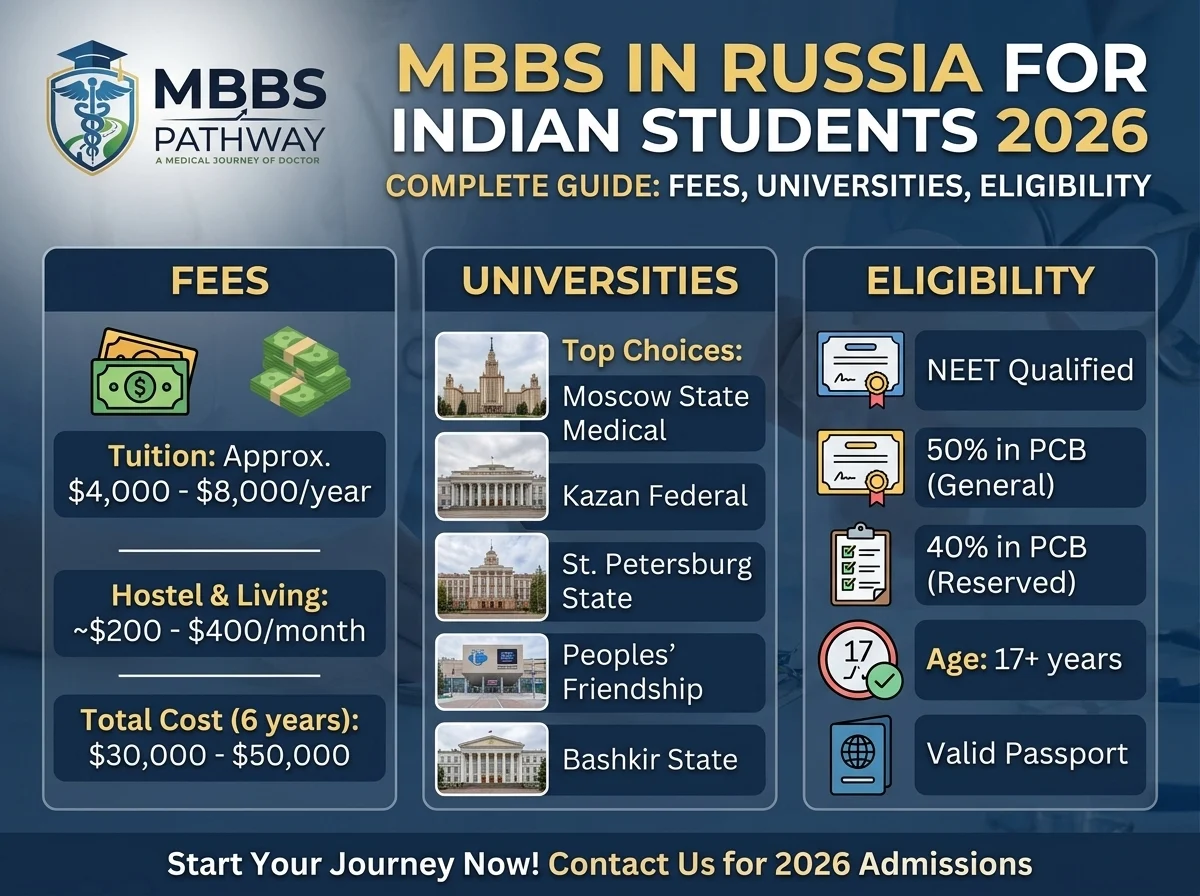
What this guide covers: Why Russia dominates the MBBS abroad space, top 10 NMC-approved universities with 2026 fees in INR, eligibility & documents, a step-by-step admission walkthrough, honest FMGE pass rate data, a deep comparison of Kazan, Sechenov & RUDN — and a frank look at student life, food, safety, and what nobody tells you before you land in Moscow.
📋 Quick Navigation
- Why Russia remains the #1 MBBS destination for Indians
- Top 10 NMC-approved medical colleges in Russia
- Russia MBBS fees 2026 — university-wise in INR
- Eligibility criteria — NEET score, age, documents
- Step-by-step admission process 2026
- Student life — Indian food, hostels, safety for girls
- FMGE pass rates from Russian universities
- Kazan vs Sechenov vs RUDN — detailed comparison
- FAQs (12 questions answered)
Why Russia Remains the Top MBBS Abroad Destination for Indians
Every year, more than 18,000 Indian students pack their bags for Russia to pursue MBBS. That number didn't happen by accident. In my experience working with students from across India — from Bihar to Karnataka, from Kolkata to Delhi — Russia keeps winning for one very clear reason: it delivers the best balance of cost, recognition, and clinical quality available anywhere in the world for Indian students.
Russia has over 60 NMC-approved medical universities. That's not a small number — it gives students genuine options at different price points and in different cities. Compare that to, say, Georgia, where NMC-approved seats are limited to a handful of universities. Or Kazakhstan, where the choices are solid but narrower. Russia gives you range.
Furthermore, the Russian government runs these as state medical universities — no private ownership, no inflated "management quota," no capitation fee. What you see in the fee structure is what you pay. I've seen this repeatedly contrast sharply with what families face in Indian private colleges, where the advertised ₹12 lakh/year often becomes ₹30 lakh/year by the time unofficial demands arrive. That transparency alone makes Russia a far less stressful experience for most families.
But here's what I always tell students: don't just pick Russia. Pick the right university in Russia. Because not all 60+ universities are equal. The FMGE pass rate varies wildly — from under 20% at some institutions to nearly 70% at the best ones. I'll break that data down for you later in this article.
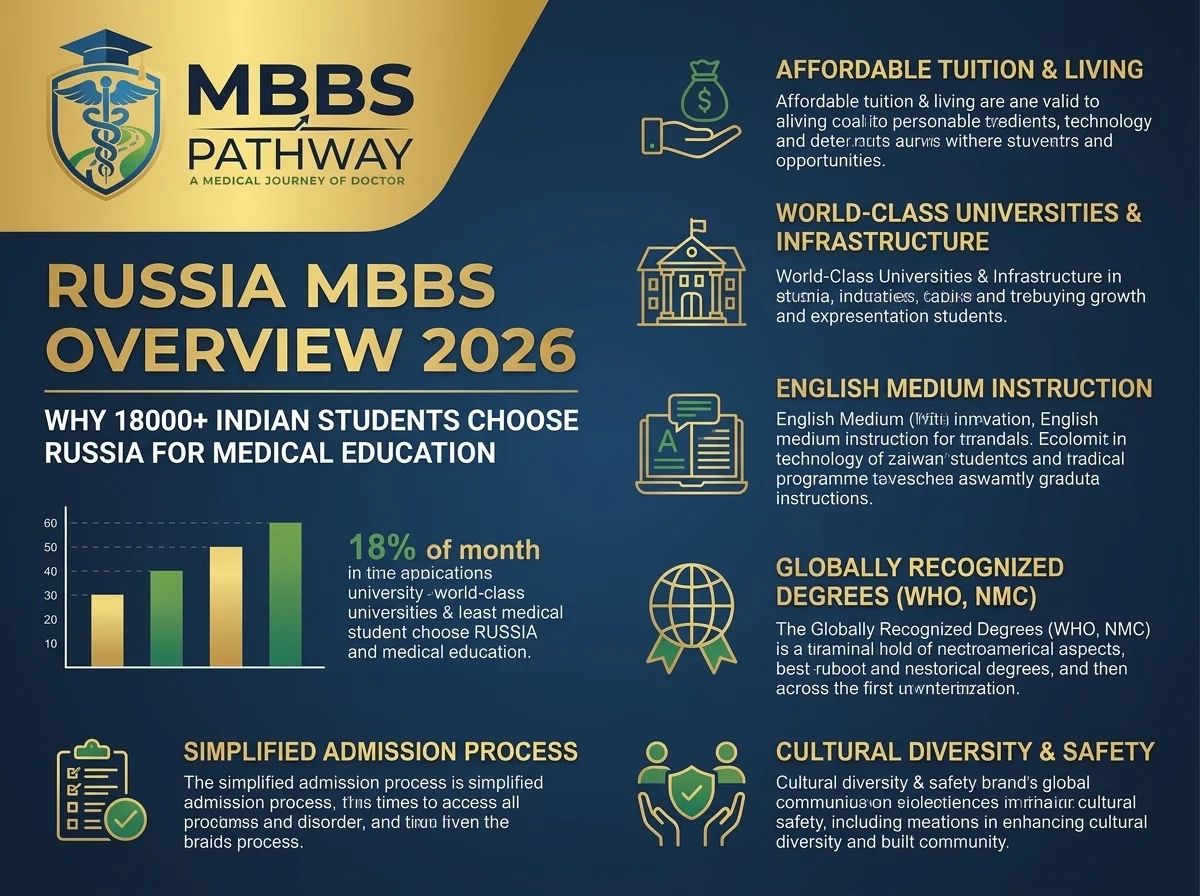
Fig 1: Key reasons Indian students choose Russia for MBBS in 2026. (Source: NMC, WHO WDOMS, MBBS Pathway student data)
Quick Facts — MBBS in Russia 2026
| Parameter | Details |
|---|---|
| Course duration | 6 years (5 years study + 1 year internship) |
| Medium of instruction | English (Russian language taught as a subject) |
| NMC-approved universities | 60+ (verify at nmc.org.in) |
| Annual tuition range | ₹2.5 lakh – ₹6.5 lakh (varies by university) |
| Living cost (avg.) | ₹9,000 – ₹25,000/month (city dependent) |
| Total 6-year cost | ₹25 lakh – ₹55 lakh (all-inclusive) |
| NEET requirement | Qualifying score mandatory (NMC 2024 guidelines) |
| Primary intake | September / October each year |
| Application window | May – late July (apply early — seats fill fast) |
| Capitation fee | None — transparent government university fee structure |
| FMGE/NExT eligibility | Yes — after graduating from NMC-approved university |
Top 10 NMC-Approved Medical Colleges in Russia (with Fee Tables)
I've personally evaluated universities across Russia — in terms of infrastructure, Indian student numbers, FMGE outcomes, hostel conditions, and faculty quality. Here are the ten I consistently recommend to students, along with 2026 fee data.
#1
I.M. Sechenov First Moscow State Medical University
Sechenov is the oldest and largest medical university in Russia — often called the birthplace of Russian medical science. Studying here carries prestige. The clinical facilities are exceptional: 16 teaching hospitals, advanced simulation labs, and exposure to rare case volumes that most universities can't match. However, it's also the most expensive Russian option, and the sheer size of the university means individual attention can be limited. Best suited for students who want a premium experience and are confident about FMGE preparation.
Annual tuition (2026 est.): $5,000–$7,000 (~₹4.5–₹6.3 lakh) | Hostel: ~₹10,000–₹15,000/month
#2
Kazan Federal University (KFU)
This is the university I most often recommend to families who ask me "which Russian university gives the best FMGE result." Kazan Federal University's FMGE pass percentage was approximately 68% in 2024 — by far the highest I've seen from any Russian institution. The campus is outstanding: a world-class library with over 5 million resources, a dedicated university clinic with 800+ beds, modern hostels, and a massive Indian student community in Kazan that makes the transition from India genuinely comfortable. The QS world ranking places it around 370. I'd pick KFU over Sechenov for most Indian students — the combination of quality, FMGE outcome, and reasonable fees is unbeaten.
Annual tuition (2026 est.): $5,800 (~₹5.2 lakh) | 6-year total (all-in): ~₹38–42 lakh | Hostel: ~₹8,000–₹12,000/month
#3
Kazan State Medical University (KSMU)
Don't confuse KSMU with Kazan Federal University — they're different institutions. KSMU is a dedicated medical school with deep clinical specialisation. The annual tuition is approximately ₹3.7–4.1 lakh, making it more affordable than KFU. FMGE results are solid, and the university has a strong track record with Indian students. Kazan as a city is safer and more India-friendly than Moscow, which makes it a practical city choice for families concerned about student welfare.
Annual tuition (2026 est.): $4,100 (~₹3.7 lakh) | 6-year total (all-in): ~₹28–33 lakh
#4
Peoples' Friendship University of Russia (RUDN)
RUDN was literally founded to educate students from developing nations — India, Africa, Asia — and that heritage shows. The university has one of the most diverse student bodies in the world and one of the best international support systems I've encountered. Indian students find the social environment extremely comfortable here. Moscow's cost of living is higher than Kazan or Ufa, so budget accordingly. RUDN is also a strong choice for students who want a recognisable name from a prominent city.
Annual tuition (2026 est.): $4,500–$5,500 (~₹4–4.9 lakh) | 6-year total (all-in): ~₹35–45 lakh
#5
Bashkir State Medical University (BSMU)
Ufa is one of my favourite cities for Indian students. The cost of living is low, the Indian student community is large and well-organised, and BSMU maintains a very good academic track record. This university consistently places in discussions about the best FMGE outcomes from Russia. It's also one of the more affordable options without compromising clinical training quality. I've sent multiple students here and the feedback has been consistently positive.
Annual tuition (2026 est.): $3,500–$4,500 (~₹3.1–4 lakh) | 6-year total (all-in): ~₹26–34 lakh
#6
Siberian State Medical University (SibSMU)
One of the oldest medical universities in Russia, SibSMU in Tomsk attracts students from 60+ countries. Tomsk is a university town — quiet, student-focused, and considerably cheaper than Moscow or St. Petersburg for living expenses. The university has a particularly strong anatomy and biochemistry department that many alumni credit for their FMGE performance. A solid pick for students who prefer a smaller-city, focused academic environment.
Annual tuition (2026 est.): $3,500–$4,000 (~₹3.1–3.6 lakh) | 6-year total (all-in): ~₹24–30 lakh
#7
Perm State Medical University (PSMU)
Perm has one of the highest Indian student concentrations among Russian medical cities. The 1,500+ strong Indian community translates to strong alumni networks, cultural events, and practical support for new arrivals. PSMU ranks first among Russian higher education institutions for patents and national research. Total all-in cost for 6 years is approximately ₹28 lakh — one of the lowest among reputable universities.
Annual tuition (2026 est.): $3,000–$3,800 (~₹2.7–3.4 lakh) | 6-year total (all-in): ~₹25–30 lakh
#8
Tver State Medical University (TSMU)
Tver's biggest advantage is geography — it's just 2.5 hours from Moscow by train, giving students access to the capital's resources while enjoying a smaller city's cost of living and safer environment. TSMU has received national recognition for international cooperation and is a popular choice for students who want Moscow proximity without Moscow prices. Clinical exposure happens at hospitals affiliated with the university in Tver and nearby Moscow.
Annual tuition (2026 est.): $3,000–$4,000 (~₹2.7–3.6 lakh) | 6-year total (all-in): ~₹24–32 lakh
#9
Rostov State Medical University (RostGMU)
Rostov-on-Don is in southern Russia — warmer than most other university cities, which matters a lot to students from south India who struggle with harsh winters. RostGMU has a long track record with international students, established Indian mess facilities, and a relatively affordable fee structure. The southern location also means shorter and less severe winters compared to Tomsk or Perm.
Annual tuition (2026 est.): $3,000–$3,800 (~₹2.7–3.4 lakh) | 6-year total (all-in): ~₹24–30 lakh
#10
Volgograd State Medical University (VolgSMU)
VolgSMU consistently ranks among the most affordable NMC-approved options in Russia. For budget-conscious families, this university offers a reasonable clinical training standard at a lower total cost. However, I'd advise students to invest seriously in FMGE coaching after returning — the university's FMGE pass rate is lower than the top-tier options. It's a viable choice if cost is the binding constraint, but don't ignore the post-graduation preparation budget.
Annual tuition (2026 est.): $3,000–$3,500 (~₹2.7–3.1 lakh) | 6-year total (all-in): ~₹22–28 lakh
Russia MBBS Fees for Indian Students 2026 — University-Wise Breakdown in INR
Here's the consolidated fee table for all 10 universities. Note that exchange rate fluctuations affect INR figures — these are calculated at approximately ₹90/USD. Always confirm current rates before making any payment.
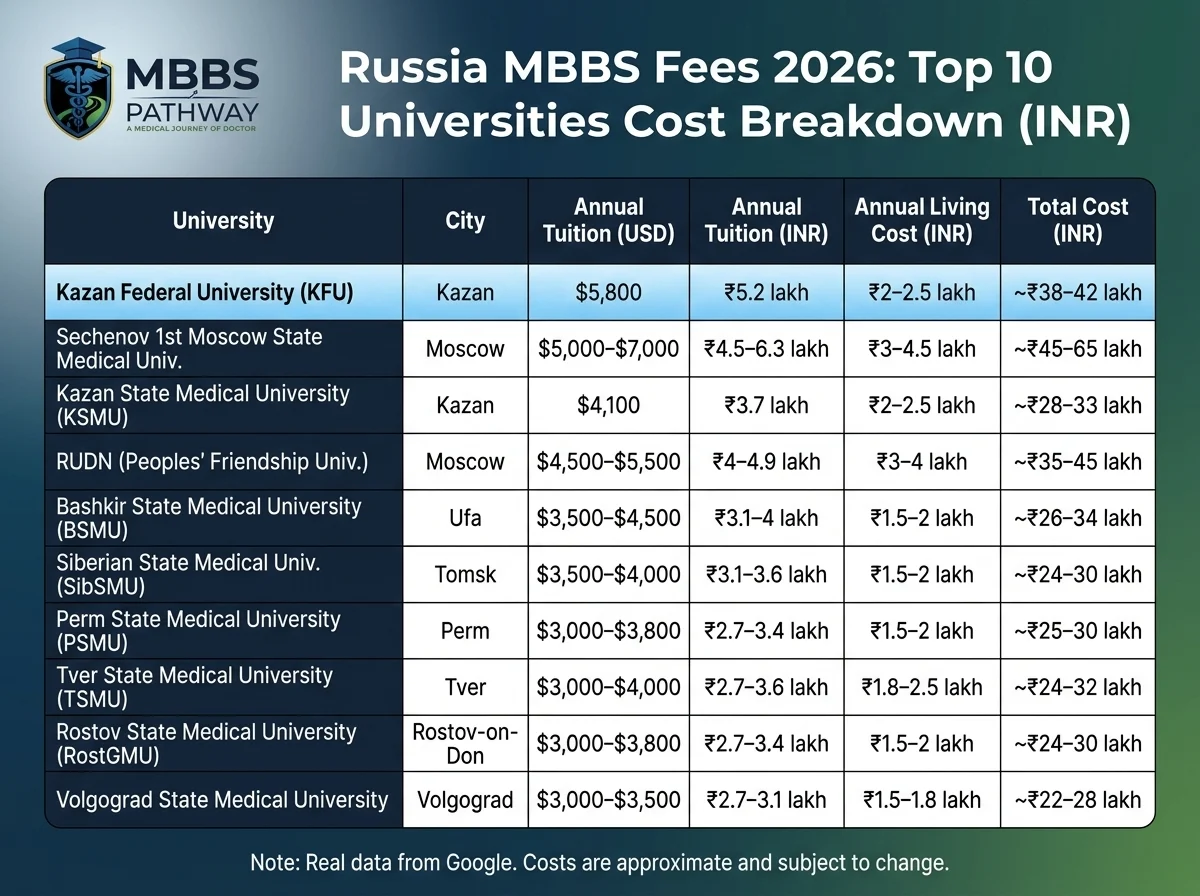
Fig 2: Russia MBBS fee comparison 2026 — all 10 universities, tuition + living, approximate INR totals.
| University | City | Annual Tuition (USD) | Annual Tuition (₹ approx.) | Annual Living (₹ approx.) | 6-Year All-In Total (₹) |
|---|---|---|---|---|---|
| Kazan Federal University (KFU) | Kazan | $5,800 | ₹5.2 lakh | ₹2–2.5 lakh | ~₹38–42 lakh |
| Sechenov 1st Moscow State Medical Univ. | Moscow | $5,000–$7,000 | ₹4.5–6.3 lakh | ₹3–4.5 lakh | ~₹45–65 lakh |
| Kazan State Medical University (KSMU) | Kazan | $4,100 | ₹3.7 lakh | ₹2–2.5 lakh | ~₹28–33 lakh |
| RUDN (Peoples' Friendship Univ.) | Moscow | $4,500–$5,500 | ₹4–4.9 lakh | ₹3–4 lakh | ~₹35–45 lakh |
| Bashkir State Medical University (BSMU) | Ufa | $3,500–$4,500 | ₹3.1–4 lakh | ₹1.5–2 lakh | ~₹26–34 lakh |
| Siberian State Medical Univ. (SibSMU) | Tomsk | $3,500–$4,000 | ₹3.1–3.6 lakh | ₹1.5–2 lakh | ~₹24–30 lakh |
| Perm State Medical University (PSMU) | Perm | $3,000–$3,800 | ₹2.7–3.4 lakh | ₹1.5–2 lakh | ~₹25–30 lakh |
| Tver State Medical University (TSMU) | Tver | $3,000–$4,000 | ₹2.7–3.6 lakh | ₹1.8–2.5 lakh | ~₹24–32 lakh |
| Rostov State Medical University (RostGMU) | Rostov-on-Don | $3,000–$3,800 | ₹2.7–3.4 lakh | ₹1.5–2 lakh | ~₹24–30 lakh |
| Volgograd State Medical University | Volgograd | $3,000–$3,500 | ₹2.7–3.1 lakh | ₹1.5–1.8 lakh | ~₹22–28 lakh |
💡 Additional costs to budget for: Return airfare (₹60,000–₹1 lakh per trip, ~6 trips over 6 years = ₹3.6–6 lakh total), FMGE/NExT coaching after graduation (₹1–3 lakh), medical insurance (₹10,000–₹25,000/year), visa and registration fees (₹25,000–₹40,000 once), forex conversion charges (~1–2%). Total additional costs: roughly ₹6–12 lakh over 6 years.
For a fuller picture of how Russia costs compare to private medical college in India, read our detailed post on MBBS abroad vs private medical college India — full cost comparison 2026. The numbers side by side are quite telling.
Eligibility Criteria — NEET Score, Age, Documents Required
Who Can Apply for MBBS in Russia?
The NMC's 2024 guidelines set the baseline — individual universities can add their own conditions, but they can't go below this floor:
| Criteria | Requirement |
|---|---|
| Academic qualification | Class 12 (10+2) with Physics, Chemistry, Biology, and English |
| Marks in PCB | Minimum 50% aggregate (General category) / 40% (SC/ST/OBC) |
| NEET | Qualifying score mandatory — 50th percentile (General) / 40th percentile (Reserved) |
| Age | Minimum 17 years by 31st December of the year of admission |
| NEET validity | Current year's NEET score — some universities accept scores up to 3 years old for abroad admissions |
And here's something I want to say clearly: Russia is often marketed as "NEET-exempt abroad." That was true years ago. It isn't now. The NMC 2024 circular made NEET mandatory for all Indian students seeking MBBS abroad. Anyone telling you otherwise is either outdated or misleading you. If you're trying to circumvent NEET, Russia isn't the answer — and neither is any other country. See our article on NMC guidelines for MBBS abroad 2026 for the full regulatory picture.
Documents Required for Russia MBBS Admission
Start collecting these early. Delays in document preparation are the number one reason students miss their intended intake year:
| # | Document | Notes |
|---|---|---|
| 1 | Valid passport | Minimum 18 months validity from date of travel |
| 2 | Class 10 mark sheet & certificate | Notarised copy required |
| 3 | Class 12 mark sheet & certificate | Must show 50%+ in PCB |
| 4 | NEET UG scorecard | Must be valid (current year or within accepted window) |
| 5 | Birth certificate | Proving age ≥ 17 by 31 Dec |
| 6 | Passport-size photographs | White background, typically 6–10 copies |
| 7 | HIV test certificate | From a government-approved lab, required by Russian immigration |
| 8 | Police clearance certificate (PCC) | Issued by local police station |
| 9 | Bank statement | Showing sufficient funds — required by Russian Embassy for visa |
| 10 | University invitation letter | Issued by the university after admission confirmation — needed for visa |
Step-by-Step Admission Process for MBBS in Russia 2026
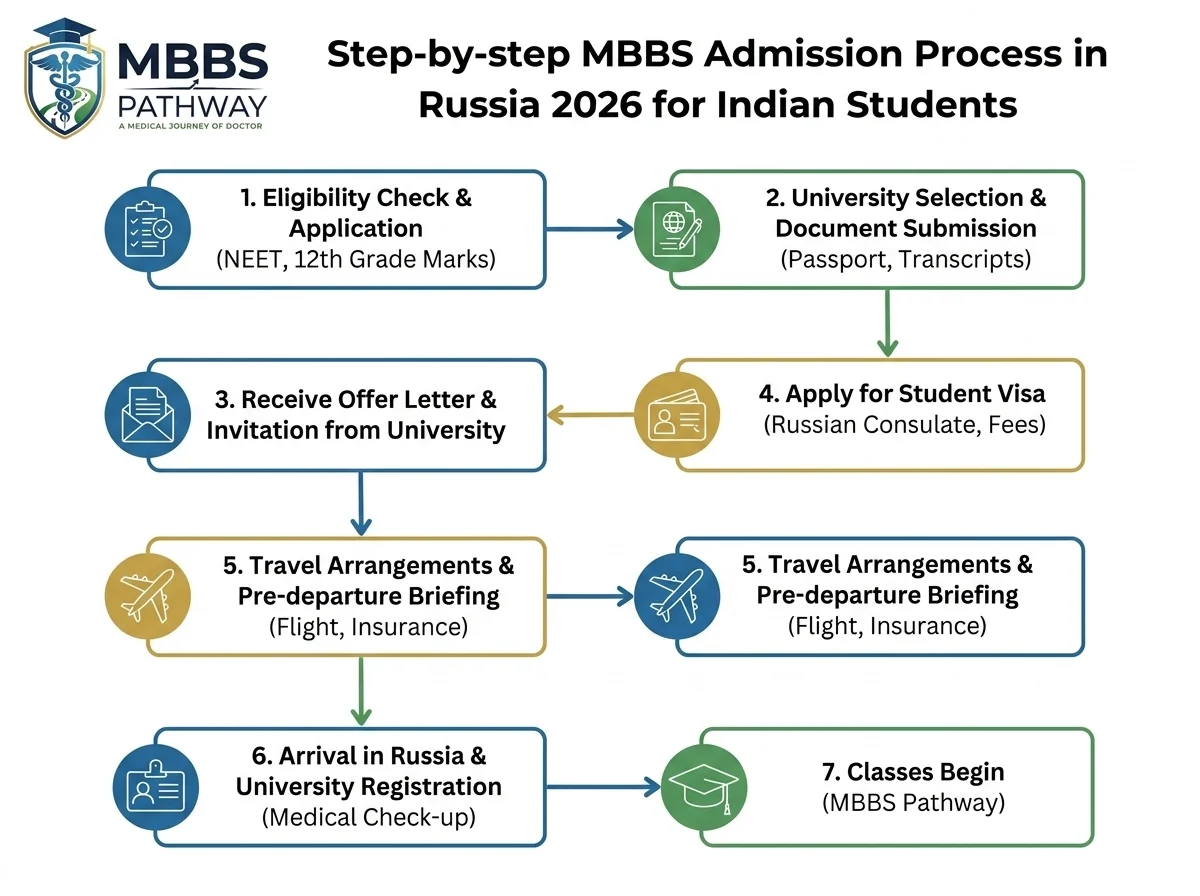
Fig 3: Complete MBBS admission process flowchart for Russia 2026 intake (September / October).
The Russia MBBS admission process is straightforward compared to Indian counselling. But "straightforward" doesn't mean "do it at the last minute." Here's how it works, step by step:
-
Step 1: Confirm eligibility & select universities (May–June) Check your NEET score meets the NMC minimum. Based on your budget, preferred city, and FMGE ambitions, shortlist 2–3 universities. Don't apply to just one — keep options open.
-
Step 2: Submit application with documents (June–July) Your chosen consultant submits scanned copies of your Class 12 marksheets, passport, and NEET scorecard directly to the university's international admissions office. Never send originals at this stage.
-
Step 3: Receive admission letter (within 2–4 weeks) The university issues a provisional admission letter confirming your seat. This is your official offer. Review it carefully — confirm the course, year, fee amount, and university name match what you were told.
-
Step 4: Pay first-year fee & receive invitation letter (July–August) After paying the first-year tuition (either via bank transfer to the university's official account or in person on arrival — depending on the university's policy), the university issues an invitation letter. Always pay to the university's official account. Never pay through an agent's personal account.
-
Step 5: Apply for student visa at Russian Embassy (August) With the invitation letter, apply for a Type D student visa at the Russian Embassy in your nearest city (Delhi, Mumbai, Chennai, Kolkata). Visa processing typically takes 3–4 weeks, so don't leave this until August ends.
-
Step 6: Book flights & prepare for departure (August–September) Book flights to the university city. Most universities send their own representative to receive students at the airport — confirm this arrangement with your consultant or the university's international student office.
-
Step 7: Arrive, register, complete medical formalities On arrival, you register with the local migration office (within 7 days of arrival — mandatory). The university or your representative handles this. You also complete a local medical check as required by Russian authorities.
⚠ Critical warning: Never deposit fee money into a consultant or agent's personal bank account. Always pay directly to the official university bank account and insist on a receipt from the university. Also read our guide on how to spot fake MBBS consultants before you start the process — fraudulent agents operating in the Russia admission space are a documented problem.
Student Life in Russia — Indian Food, Hostels, Safety for Girls
Parents worry. That's understandable. So let me give you an honest picture of what student life in Russia actually looks like for Indian students in 2026.
Indian Food — A Bigger Deal Than You Think
Six years is a long time to eat unfamiliar food. Fortunately, most universities with large Indian student populations have addressed this directly. Universities like Bashkir State Medical University in Ufa, Kazan Federal University, and Perm State Medical University all have Indian mess facilities either on-campus or within walking distance, managed by Indian cooks. Cities like Kazan and Ufa have Indian grocery stores and restaurants that have emerged to serve the 1,000+ Indian students in each city. Students generally report adapting well within 2–3 months.
Hostel Conditions
Russian university hostels vary significantly by institution. The best ones — at KFU, Sechenov, and RUDN — offer single, double, and triple-sharing rooms with attached kitchens, laundry facilities, and security. Monthly hostel costs range from ₹7,000–₹15,000 depending on the city and room type. Heating is included (critical for Russian winters). I always advise students to check hostel photos and reviews from current Indian students at the university before committing — not polished brochure photos, but real ones from student WhatsApp groups.
Safety for Girls
This is the question I get most often from parents of female students. Russia's major medical university cities are generally safe for Indian students. Campuses maintain 24/7 security, CCTV, and in many universities, dedicated security guards for international student hostels. Indian student associations in each city are active and supportive — new arrivals are typically received and integrated into these communities quickly. That said, standard safety awareness applies: avoid walking alone at night in unfamiliar areas, stay in contact with your student community, and save emergency contacts on your phone from day one.
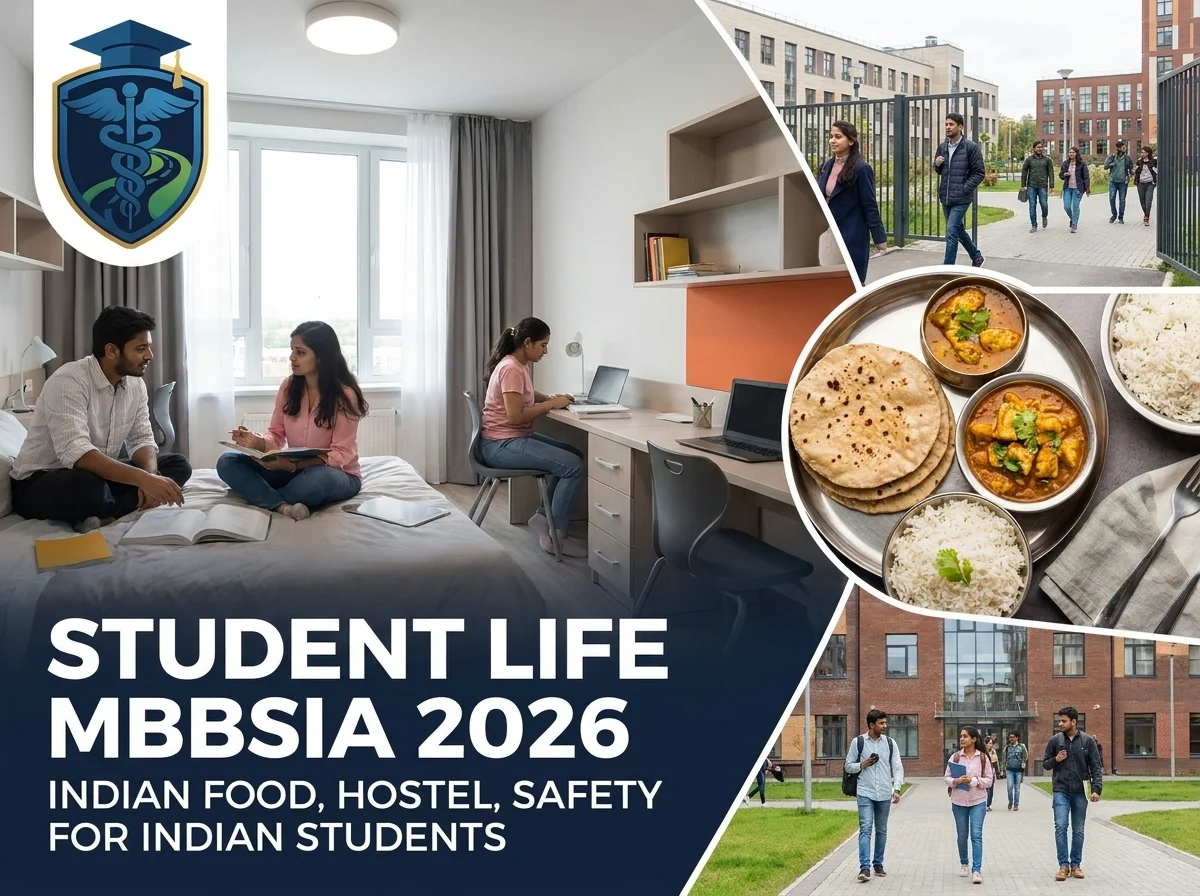
Fig 4: Campus life for Indian MBBS students in Russia — hostel facilities, Indian food, and cultural events (Kazan).
FMGE Pass Rates from Russian Universities — Which Ones to Avoid
Let's talk about the number that actually matters most for your career. The FMGE December 2025 overall pass rate was a sobering 23.37%. But here's what most guides don't tell you: that number is an average across all countries, all universities, and all quality levels. Russian universities as a group perform considerably better. And within Russia, there's a massive spread.
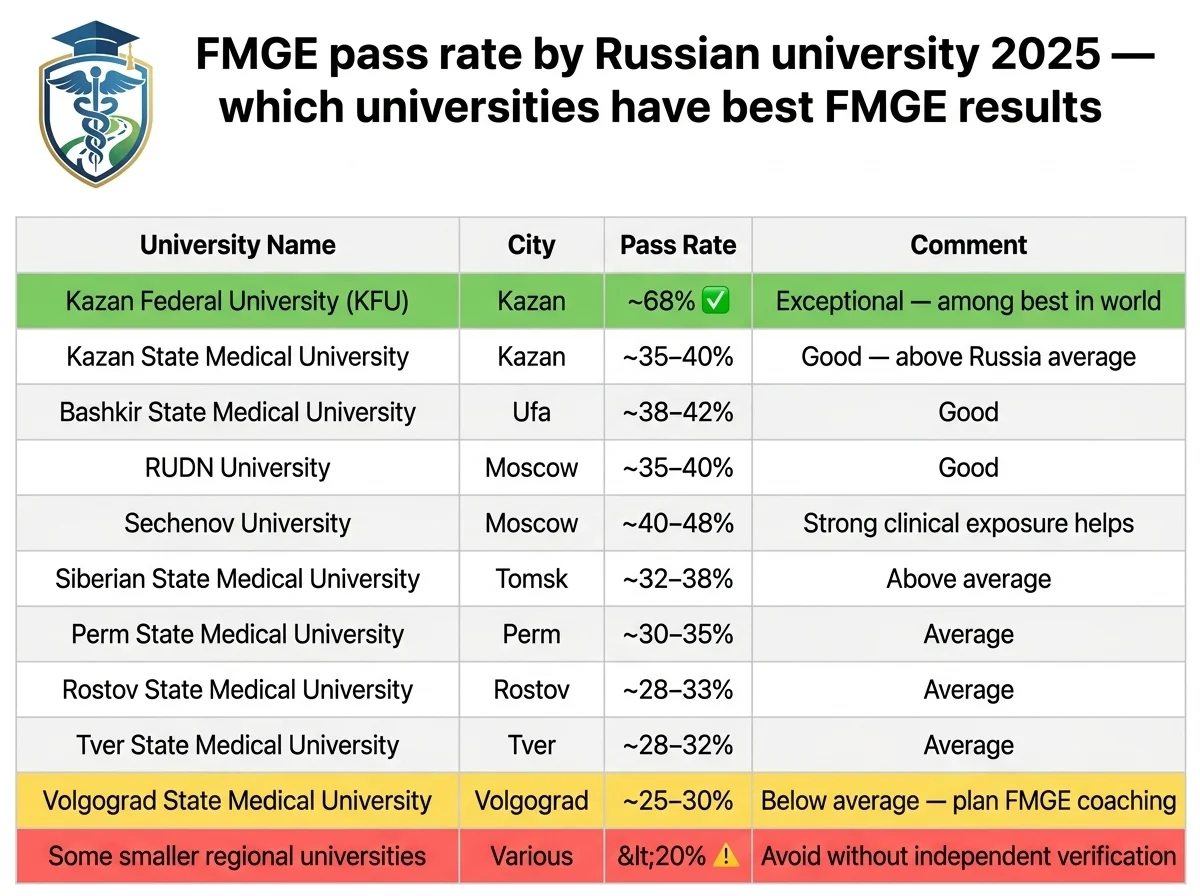
Fig 5: Estimated FMGE pass rate comparison across Russian universities (based on NBE 2024–25 data trends). Always verify current-year data at nbe.edu.in.
| University | City | Approx. FMGE Pass Rate | Assessment |
|---|---|---|---|
| Kazan Federal University (KFU) | Kazan | ~68% ✅ | Exceptional — among best in world |
| Kazan State Medical University | Kazan | ~35–40% | Good — above Russia average |
| Bashkir State Medical University | Ufa | ~38–42% | Good |
| RUDN University | Moscow | ~35–40% | Good |
| Sechenov University | Moscow | ~40–48% | Strong clinical exposure helps |
| Siberian State Medical University | Tomsk | ~32–38% | Above average |
| Perm State Medical University | Perm | ~30–35% | Average |
| Rostov State Medical University | Rostov | ~28–33% | Average |
| Tver State Medical University | Tver | ~28–32% | Average |
| Volgograd State Medical University | Volgograd | ~25–30% | Below average — plan FMGE coaching |
| Some smaller regional universities | Various | <20% ⚠ | Avoid without independent verification |
The pattern is clear: universities in Kazan — especially KFU — dramatically outperform the rest. In my view, the Kazan advantage comes from a combination of strong English-medium clinical training and a large, well-organised Indian student community that shares FMGE preparation resources. Students at KFU form study groups, pool coaching resources, and support each other through the licensing exam in a way I haven't seen replicated as effectively elsewhere.
So if FMGE success is your primary concern — and it should be — Kazan is your city. If budget is the dominant factor, look at Tomsk, Perm, or Rostov, but invest seriously in FMGE coaching preparation from Year 4 onward. Our team provides FMGE and NExT exam guidance as part of our student support — including connecting students with coaching resources while they're still in Russia.
For full FMGE data by country, read our article on FMGE pass rate by country 2025.
Kazan Federal University vs Sechenov vs RUDN — Detailed Comparison
These are the three names that come up most in conversations with families. Let me be direct about how I see each one.
| Parameter | Kazan Federal University (KFU) | Sechenov University (Moscow) | RUDN University (Moscow) |
|---|---|---|---|
| Established | 1804 | 1758 | 1960 |
| City | Kazan | Moscow | Moscow |
| QS World Rank | ~370 | Top 300 (globally strong) | ~350–400 |
| Annual tuition (est.) | ~₹5.2 lakh | ~₹4.5–6.3 lakh | ~₹4–4.9 lakh |
| Living cost | ₹2–2.5 lakh/year (lower) | ₹3–4.5 lakh/year (higher) | ₹3–4 lakh/year |
| 6-year total (all-in) | ~₹38–42 lakh | ~₹45–65 lakh | ~₹35–48 lakh |
| FMGE pass rate | ~68% ✅ Best | ~40–48% | ~35–40% |
| Indian student community | Very large, well-organised | Large (Moscow is pricier) | Extremely diverse, supportive |
| Clinical exposure | 800-bed university clinic | 16 teaching hospitals — exceptional | Strong — urban hospital access |
| Indian mess / food | ✅ Available nearby | ✅ Available in Moscow | ✅ Available in Moscow |
| Safety (girls) | ✅ Kazan very safe | Larger city — standard precautions | Diverse campus — generally safe |
| Best for... | FMGE success + value | Prestige + clinical breadth | International experience + comfort |
My honest take: for most Indian students with a typical budget and a strong focus on returning to practice in India, Kazan Federal University is the best choice available anywhere in Russia right now. The FMGE pass rate alone makes it worth the slightly higher fee compared to affordable options like Volgograd or Perm. Sechenov makes sense if prestige, research, and access to Moscow's medical ecosystem are priorities — and if the family's budget comfortably covers the higher living cost in Moscow. RUDN is a strong middle ground for students who want Moscow access and a diverse international community at a slightly lower cost than Sechenov.
Frequently Asked Questions — MBBS in Russia for Indian Students 2026
Is MBBS from Russia valid in India?
Yes. MBBS from Russia is fully valid in India provided you graduated from an NMC-approved university listed in the WHO World Directory of Medical Schools (WDOMS). After graduating, you must clear the FMGE (currently) or the new NExT exam to receive a license to practice medicine in India. Over 60 Russian medical universities meet this criterion.
What is the total cost of MBBS in Russia for Indian students in 2026?
The total all-inclusive cost (tuition + hostel + food + flights + insurance) ranges from approximately ₹25 lakh to ₹55 lakh for the 6-year program depending on the university and city. Affordable universities in Perm, Tomsk, or Volgograd fall in the ₹25–32 lakh range. Kazan Federal University costs roughly ₹38–42 lakh. Sechenov (Moscow) is the most expensive at ₹45–65 lakh all-in.
How many NMC-approved medical colleges are in Russia?
Russia has over 60 NMC-approved medical universities. You can verify the current list at nmc.org.in and confirm any university through the WHO WDOMS at search.wdoms.org. Always double-check before applying — the list is updated periodically.
What NEET score do I need for MBBS in Russia 2026?
You must qualify NEET UG with at least the 50th percentile for General category (approximately NEET score 150+) and the 40th percentile for SC/ST/OBC. NEET is mandatory as per NMC 2024 guidelines — there's no NEET-exempt MBBS abroad anymore. Individual Russian universities may set their own minimum cutoffs above the NMC threshold.
Which Russian university has the best FMGE pass rate?
Kazan Federal University (KFU) had an FMGE pass rate of approximately 68% in 2024 — the highest I've seen among Russian institutions. Sechenov and Bashkir State Medical University also perform above the Russia average. For more detail, read our dedicated article on FMGE pass rates by country at the link below this section.
Is Russian language compulsory for MBBS?
The MBBS program at all NMC-approved Russian universities is taught in English for international students. However, basic Russian language is taught as a mandatory subject because clinical interactions with patients happen in Russian. Most students become conversationally comfortable in Russian within their first year. It's not a barrier — it's an advantage once you're in the wards.
Is Russia safe for Indian girls studying MBBS?
Yes — major medical university cities in Russia are generally safe. University campuses maintain 24/7 security, CCTV, and dedicated security for international student hostels. Large Indian student communities in Kazan, Ufa, Perm, and Moscow provide a strong support network for new arrivals. Standard safety awareness applies: travel in groups at night, keep emergency contacts saved, and connect with the Indian student association within your first week.
When does Russia MBBS admission start for 2026?
Applications for the September 2026 intake typically open in May 2026. Most popular universities close admissions by late July or early August. Kazan Federal University and Bashkir State Medical University fill their Indian student quota quickly — apply by June for best results. A January intake is available at some universities, but September is the primary intake.
Can I get an education loan for MBBS in Russia?
Yes. SBI, Bank of Baroda, Punjab National Bank, Axis Bank, and HDFC Credila all offer education loans for MBBS at NMC-approved Russian universities. Loan amounts range from ₹10 lakh to ₹1.5 crore. The university must be on the NMC list and in the WHO WDOMS. Our team helps families with education loan documentation — check our education loan & forex support page for details.
What is the MBBS course structure in Russia?
MBBS in Russia is a 6-year program. Years 1–3 cover basic sciences (anatomy, physiology, biochemistry, pathology, microbiology). Years 4–6 cover clinical sciences (medicine, surgery, OBG, paediatrics, ENT, ophthalmology) with active hospital postings. Year 6 is a mandatory internship in university-affiliated hospitals. The curriculum broadly aligns with the NMC guidelines and is designed to prepare students for FMGE/NExT on return to India.
Is Indian food available in Russia?
Yes — in all major medical university cities. Kazan, Ufa, Perm, Moscow, and Rostov all have Indian mess facilities (usually run by Indian cooks near or on campus) and Indian grocery stores serving the large Indian student communities. Students typically report adjusting to Russian food culture within 2–3 months, with Indian food available as a supplement or primary diet throughout their stay.
Can I do MD/MS in India after MBBS from Russia?
Yes. After clearing the NExT exam (which replaces FMGE from 2025), MBBS graduates from NMC-approved Russian universities are fully eligible to apply for NEET PG and pursue MD/MS specialization in India. The NExT Step 2 score will serve as the PG entrance rank in the new system, putting foreign MBBS graduates on a level playing field with Indian MBBS graduates for PG admissions.
Sources & External References
- National Medical Commission (NMC) — Official approved university list & 2024 guidelines
- WHO World Directory of Medical Schools — University verification tool
- National Board of Examinations (NBE) — FMGE pass rate data by university
- QS World University Rankings — Kazan Federal University profile
- Indian Embassy, Moscow — Student safety guidelines for Indian students in Russia (2024–2025)
Ready to Apply for MBBS in Russia 2026?
The September 2026 intake opens in May. Kazan Federal University, Bashkir State Medical University, and Perm State Medical University seats fill by July. Don't wait — a free counselling call now can save you a year of delay..
Book Free Counselling Call →📞 Or WhatsApp now: +91 88266 53638